Price in Bangladesh
৳ 20.06 unit price
Price updated: 22 Nov 2026
- Strength
- 16 mg
About Methipred 16 mg Tablet
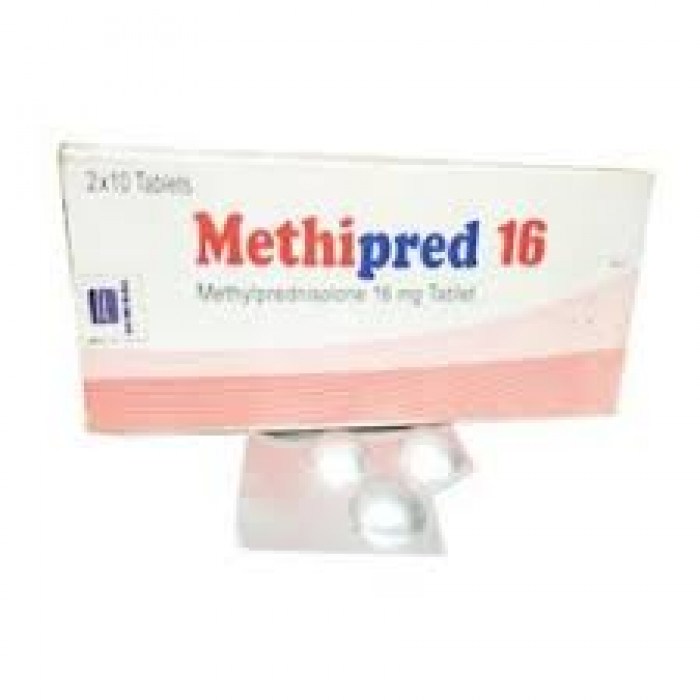
Methipred is a tablet from General Pharmaceuticals Ltd., with the generic name Methylprednisolone. Methylprednisolone tablets are used in endocrine disorders such as primary or secondary adrenocortical insufficiency, congenital adrenal hyperplasia, nonsuppurative thyroiditis and hypercalcaemia linked with cancer.
There are 5 brands of Methylprednisolone listed in Bangladesh. 5 of them have a lower unit price than Methipred. The lowest listed price is Methsolon 4 mg Tablet at ৳ 6.00 per unit.
What is Methipred 16 mg Tablet?
Methipred is a tablet from General Pharmaceuticals Ltd., with the generic name Methylprednisolone. It belongs to the glucocorticoid group of medicines. It also affects the kidneys, fluid and salt balance, fat, protein and carbohydrate metabolism, muscle, the heart and blood vessels, the immune system, the nervous system and the endocrine system. Whether it suits you is a decision for your doctor.
Uses of Methipred
Methylprednisolone tablets are used in endocrine disorders such as primary or secondary adrenocortical insufficiency, congenital adrenal hyperplasia, nonsuppurative thyroiditis and hypercalcaemia linked with cancer. It works as an anti-inflammatory and immune-suppressing medicine. Your doctor will decide whether this medicine is suitable for your condition.
How to use Methipred
Take it with or without food as advised by your doctor. Swallow the tablet with water. Methipred is taken by mouth. Follow your doctor's instructions carefully. Do not change the dose or stop the medicine on your own, because glucocorticoids can need careful adjustment. The doctor decides the dose, how often to take it and how long the course lasts.
Side effects of Methipred
Short courses of methylprednisolone are often tolerated with few, mild side effects. Tell the doctor if you notice any unwanted effects, and do not adjust the medicine yourself. Reported side effects include fluid retention, weight gain, high blood pressure, potassium loss, headache, muscle weakness and increased hair growth. Tell your doctor if you notice any unusual symptoms while taking Methipred. Tell your doctor if any side effect bothers you or does not go away.
Safety and precautions
Methipred is pregnancy category C, meaning it should be used only if the potential benefit justifies the potential risk to the foetus. The medicine is contraindicated in systemic fungal infections and in people known to be hypersensitive to its components. Methipred should not be used by anyone with a systemic fungal infection or a known allergy to any ingredient. Ask your doctor before use if you have any of these conditions.
Frequently asked questions
What is Methipred used for?
Methylprednisolone tablets are used in endocrine disorders such as primary or secondary adrenocortical insufficiency, congenital adrenal hyperplasia, nonsuppurative thyroiditis and hypercalcaemia linked with cancer. It works as an anti-inflammatory and immune-suppressing medicine.
How is Methipred used?
Take it with or without food as advised by your doctor. Swallow the tablet with water.
What are the side effects of Methipred?
Short courses of methylprednisolone are often tolerated with few, mild side effects. Tell the doctor if you notice any unwanted effects, and do not adjust the medicine yourself.
How much does Methipred cost in Bangladesh?
The listed price is ৳ 20.06.
Indications
Endocrine Disorders: Primary or Secondary Adrenocortical Insufficiency, Congenital Adrenal Hyperplasia, Nonsuppurative Thyroiditis, Hypercalcemia associated with Cancer.
Rheumatic Disorders: Rheumatoid Arthritis. Juvenile Rheumatoid Arthritis, Ankylosing ... Read moreEndocrine Disorders: Primary or Secondary Adrenocortical Insufficiency, Congenital Adrenal Hyperplasia, Nonsuppurative Thyroiditis, Hypercalcemia associated with Cancer.
Rheumatic Disorders: Rheumatoid Arthritis. Juvenile Rheumatoid Arthritis, Ankylosing Spondylitis, Acute and Subacute Bursitis, Synovitis of Osteoarthritis, Acute nonspecific Tenosynovitis, Post-traumatic Osteoarthritis, Psoriatic Arthritis, Epicondylitis, Acute Gouty Arthritis.
Collagen Diseases: Systemic lupus Erythematosus, Systemic Dermatomyositis and Acute Rheumatic Carditis.
Dermatologic Diseases: Bullous Dermatitis Herpetiformis, Severe Erythema Multiforme (Stevens-Johnson syndrome), Severe Seborrheic Dermatitis, Exfoliative Dermatitis, Mycosis Fungoides, Pemphigus, Severe Psoriasis.
Allergy: Seasonal or Perennial Allergic Rhinitis, Drug hypersensitivity reactions, Serum Sickness, Contact Dermatitis, Bronchial Asthma and Atopic Dermatitis;
Ophthalmic Diseases: Allergic Corneal Ulcers, Herpes Zoster Ophthalmicus, Anterior segment inflammation, Sympathetic Ophthalmia, Keratitis, Optic Neuritis, Allergic Conjunctivitis, Chorioretinitis, iritis end iridocyclitis.
Respiratory Diseases: Symptomatic sarcoidosis, Loeffler's syndrome not manageable by other means, berylliosis, Aspiration Pneumonitis.
Hematological Disorders: Idiopathic Thrombocytopenic Purpura in adults, Secondary Thrombocytopenia in adults, Acquired (Autoimmune) Hemolytic Anemia, Erythroblastopenia, Congenital (Erythroid) Hypoplastic Anemia.
Neoplastic Diseases: For palliative management of Leukemias and Lymphomas in adults, Acute leukemia of childhood.
Edematous States: To induce a diuresis or remission of Proteinuria in the Nephrotic Syndrome, without Uremia, of the idiopathic type or that due to Lupus Erythematosus.
Gastrointestinal Disease: To tide the patient over a critical period of the disease in Ulcerative Colitis & Regional Enteritis.
CNS Disease: Acute Exacerbations of Multiple Sclerosis.
Pharmacology
Pharmacodynamic properties: Methylprednisolone Is a potent anti-inflammatory agent with the capacity to profoundly inhibit the immune system. Glucocorticoids primarily bind to and activate intracellular glucocorticoid receptors that being activated bind to promoter regions of DMA (which may activate or suppress transcription) and activate transcription factors that result in inactivation of genes through deacetylation of histones. Methylprednisolone influences the kidney and fluid & electrolyte balance, lipid,
protein, and carbohydrate metabolism, skeletal muscle, the cardiovascular system, the immune system, the nervous system, and the endocrine system.
Pharmacokinetic properties: The absolute bioavailability of Methylprednisclone is generally high (82% to 89%) following oral administration and rapidly absorbed and the maximum plasma concentration is achieved around 1.5 to 2.3 hours across doses following oral administration in normal healthy adults. Methylprednisolone is widely distributed into the tissues and its volume of distribution is 41-61.5 liter. It crosses the Wood-brain barrier and the placental barrier and is secreted in breast milk. The plasma protein binding of Methylprednisolone in humans is approximately 77%. Methylprednisolone is metabolized in the liver to inactive metabolites. No dosing adjustments are necessary for renal failure. Methylprednisolone is haemodializable.
Dosage & Administration
The usual range is 2-48 mg daily in divided doses, depending on the specific disease being treated.
As anti-inflammatory or immunosuppressive initial dosage: As anti-inflammatory or immunosuppressive, the initial dosage of Methylprednisolone tablets may vary from 4-48 mg per day depending on the specific disease entity being treated, in situations of less severity lower doses will generally suffice while in selected patients higher initial doses may be required. The initial dosage should be maintained or adjusted until a satisfactory response is noted. If after a reasonable period of time there is a lack of satisfactory dirtied response, Methylprednisolone should be discontinued and the patient transferred to other appropriate therapy. It should be emphasized that dosage requirements are variable and must be Individualized on the basis of the disease under treatment and the response of the patient.
As anti-inflammatory or immunosuppressive maintenance dosage: After a favorable response is noted, the proper maintenance dosage should be determined by decreasing the initial drug dosage in small decrements at appropriate time intervals until the lowest dosage which will maintain an adequate clinical response is reached. It should be kept in mind that constant monitoring is needed in regard to drug dosage. If after long-term therapy the drug is to be stopped, it is recommended that it be withdrawn gradually rather than abruptly.
Multiple Sclerosis: In the treatment of acute exacerbations of multiple sclerosis, daily doses of 160 mg of Methylprednisolone for a week followed by 64 mg every other day for 1 month have been shown to be effective.
Methylprednisolone 4 mg tablet can be used to treat and to control severe allergy end dermatitis following the guideline listed below to minimize the steroid withdrawal syndromes:
- Day 1: 2 tablets before breakfast + 1 tablet after lunch + 1 tablet after dinner + 2 tablets at bedtime
- Day 2: 1 tablet before breakfast + 1 tablet after lunch + 1 tablet after dinner + 2 tablets at bedtime
- Day 3: 1 tablet before breakfast + 1 tablet after lunch + 1 tablet after dinner + 1 tablet at bedtime
- Day 4: 1 tablet before breakfast + 1 tablet after lunch + 1 tablet at bedtime
- Day 5: 1 tablet before breakfast + 1 tablet at bedtime
- Day 6: 1 tablet before breakfast
Alternate-day therapy (ADT): Alternate-day therapy is a corticosteroid dosing regimen in which twice the usual daily dose of corticoid is administered every other morning. The purpose of this mode of therapy is to provide the patient requiring long-term pharmacologic dose treatment with the beneficial effects of corticoids, white minimizing certain undesirable effects, including pituitary-adrenal suppression, Cushingoid stats, Corficoid withdrawal symptoms, and growth suppression in children.
The following should be kept in mind when considering alternate-day therapy:
- Basic principles and indications for corticosteroid therapy should be applied.
- Alternate-day therapy is a therapeutic technique primarily designed for pefienis in whom long-term pharmacologic corticoid therapy is anticipated.
- In less severe disease processes in which corticoid therapy is indicated, it may be possible to initiate treatment with alternate-day therapy. More severe disease state usually will require daily divided high dose therapy for initiai control of the disease process. The initial suppressive dose level should be continued until a satisfactory clinical response is obtained, usually four to ten days in the case of many allergic and collagen diseases.
Interaction
Erythromycin, Clarithromycin, Phenobarbital, Phenytoin, Rifampin and Ketoconazole inhibit the metabolism of Methylprednisolone. Estrogens, including With control pills, can increase the effect of corticosteroids by 50%. Cyclosporin reduces the metabolism of Methylprednisolone. while Methylprednisolone reduces the metabolism of Cyclosporin. Methylprednisolone may increase or decrease the effect of blood thinners (e.g. Warfarin). For all these Interactions, the dose of Methylprednisolone may need to be lowered.
Contraindications
Systemic fungal infections arid known hypersensitivity to components.
Side Effects
Short courses of Methylprednisolone are usually well-tolerated with few, mild side effects. Long term, high doses of Methyiprednisoione may produce predictable and potentially serious side effects. Whenever possible, the lowest effective doses of Methylprednisolone should be used for the shortest length of time to minimize side effects. Alternate day dosing also can help reduce side effects. Side effects of Methylprednisolone and other corticosteroids range from mild annoyances to serious irreversible bodily damage. Side effects include fluid retention, weight gain, high blood pressure, potassium loss, headache, muscle weakness, hair growth on the face, glaucoma, cataracts, peptic ulceration, growth retardation in children, convulsions, and psychic disturbances including depression, euphoria, insomnia etc. Prolonged use of Methylprednisolone can depress the ability of the body's adrenal glands to produce corticosteroids. Abruptly stopping Methylprednisolone in these individuals can cause symptoms of corticosteroid insufficiency, with accompanying nausea, vomiting, and even shock. Therefore, withdrawal of Methylprednisolone usually is accomplished by gradually lowering the dose. Gradually tapering Methylprednisolone not only minimizes the symptoms of corticosteroid insufficiency, it also reduces the risk of an abrupt flare of the disease being treated.
Pregnancy & Lactation
Pregnancy category C. Dregs should be given only if the potential benefit justifies the potential risk te the foetus. Mefhyiprednisofone has not been adequately evaluated in nursing mothers.
Precautions & Warnings
Adrenocortical insufficiency may persist for months after discontinuation of therapy; therefore, in any situation of stress occurring during that period, hormone therapy should be reinstituted. Since mineralocorticoid secretion may be impaired, salt and/or a mineralocorticoid should be administered concurrently. There is an enhanced effect of corticosteroids on patients with hypothyroidism and in those with cirrhosis. Corticosteroids should be used cautiously in patients with ocular herpes simplex because of possible corneal perforation. Aspirin should be used cautiously in conjunction with corticosteroids in hypoprothrombinemia. The growth and development of infants and children on prolonged corticosteroid therapy should be carefully observed.
Overdose Effects
Report of acute toxicity and/or death following an overdose of glucocorticoid ere rare. No specific antidote is available; treatment is supportive and symptomatic. Serum electrolytes should be monitored.
Storage Conditions
Store in a cool and dry place, away from light. Keep out of reach of children.
Medicine information is for reference only and is not medical advice. Always follow your doctor's prescription and check with a pharmacist.