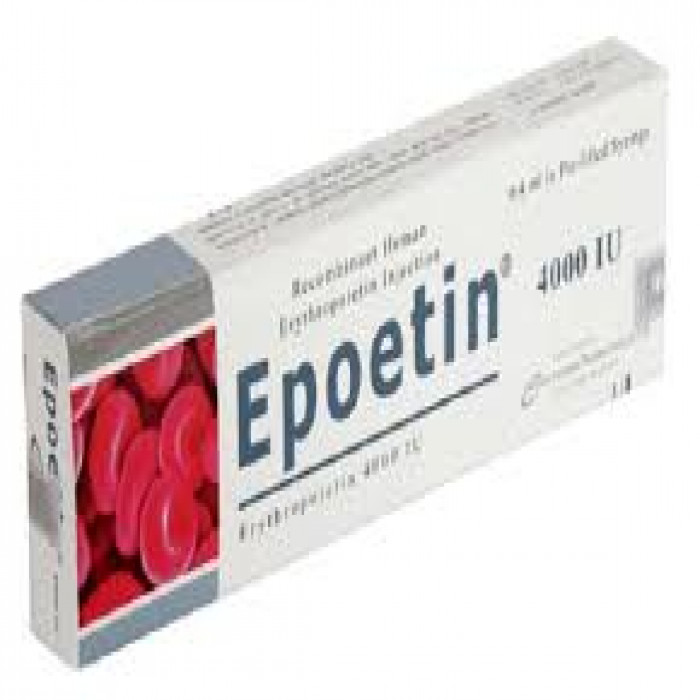
Epoetin IV/SC Injection

About Epoetin 4000 IU IV/SC Injection

Made by Incepta Pharmaceuticals Ltd., Epoetin is a iv/sc injection whose active ingredient is Erythropoietin. It is not a general tonic for tiredness.

There are 14 brands of Erythropoietin listed in Bangladesh. 3 of them have a lower unit price than Epoetin. The lowest listed price is Epoetin 2000 IU IV/SC Injection at ৳ 1025.00 per unit.

What is Epoetin 4000 IU IV/SC Injection?

Epoetin 4000 IU iv/sc injection is a medicine made by Incepta Pharmaceuticals Ltd. It belongs to a group of drugs used for anemia linked to long-term kidney failure and for anemia in some cancer patients whose anemia is caused by chemotherapy. Because it is given by iv/sc injection, it is handled by a doctor or a trained health worker. Use it only as your doctor directs.

Uses of Epoetin

It is not a general tonic for tiredness. It is also used for anaemia in some patients with non-myeloid cancers where the anaemia is caused by chemotherapy given alongside. Whether it suits a particular person depends on the doctor's assessment, and the doctor decides the dose and course.

How to use Epoetin

You should not try to inject it yourself unless a health professional has taught you how. Do not inject it yourself unless a doctor has shown you how. Epoetin is given as an injection by a healthcare professional. Keep the medicine out of reach of children. If you miss a dose, ask your doctor or pharmacist what to do. The doctor decides the dose, how often it is given, and how long treatment continues, based on blood tests and the patient's response.

Side effects of Epoetin

Palpitations and raised potassium levels can occur, and allergic reactions are possible. Common side effects include headache, dizziness, fever, tiredness, joint pain and, occasionally, high potassium levels. Some people get headache, dizziness, fever, tiredness, joint pain, nausea, vomiting, loss of appetite or diarrhoea. Tell your doctor promptly about severe headache, swelling, or any sign of an allergic reaction, and seek urgent care if breathing becomes difficult. Contact your doctor if you notice anything unusual after taking it.

Safety and precautions

In pregnancy it is used only when clearly needed; it is not known whether it passes into breast milk, so breastfeeding mothers should ask the doctor first. It is used with caution in people with controlled high blood pressure, ischaemic vascular disease, a history of seizures, or a suspected allergy to the product. Keep out of reach of children.

Frequently asked questions

What does Epoetin treat?

It is not a general tonic for tiredness. It is also used for anaemia in some patients with non-myeloid cancers where the anaemia is caused by chemotherapy given alongside.

How is Epoetin used?

You should not try to inject it yourself unless a health professional has taught you how. Do not inject it yourself unless a doctor has shown you how.

Can Epoetin cause side effects?

Palpitations and raised potassium levels can occur, and allergic reactions are possible. Common side effects include headache, dizziness, fever, tiredness, joint pain and, occasionally, high potassium levels.

What is the price of Epoetin?

The listed price is ৳ 1935.00.

Indications

Erythropoietin is indicated for the treatment of-
  • Anemia associated with Chronic Renal Failure, including patients on dialysis and patients not on dialysis.
  • Anemia in patients with non-myeloid malignancies where anemia is due to the effect of concomitantly administered chemotherapy.
  • ... Read more
Erythropoietin is indicated for the treatment of-
  • Anemia associated with Chronic Renal Failure, including patients on dialysis and patients not on dialysis.
  • Anemia in patients with non-myeloid malignancies where anemia is due to the effect of concomitantly administered chemotherapy.
  • Anemic patients (hemoglobin >10 to <13 g/dL) are scheduled to undergo elective, noncardiac, nonvascular surgery to reduce the need for allogeneic blood transfusions.
  • Anemia related to therapy with zidovudine in HIV-infected patients.

Dosage & Administration

Treatment of anemia in chronic renal failure: Erythropoietin is administered to maintain hemoglobin concentration between 11 to 12 g/dl and hematocrit of 33-36 % in adults.

Starting dose:
  • Adult: Usually 50 to 100 lU/kg three times in a week (TIW) by IV or Subcutaneous route.
  • Pediatric: 50 lU/kg TIW by IV or Subcutaneous route.
Dose adjustment: Dose should be increased if hematocrit doses not increase by 5 to 6 points after 8 weeks therapy, and hematocrit is below suggested target range. Dose should be reduced when hematocrit approaches 36% or hematocrit increases >4 points in any 2-week period.

Maintenance dose: Maintenance dose must be individualized for each patient. In patients undergoing dialysis, the median maintenance dose is 75 lU/kg TIW, with a range from 12.5 to 525 lU/kg TIW as directed by the physician. In CRF patients not on dialysis, maintenance dose is 75 to 150 lU/kg/week.

Treatment of Anemia in Cancer Patients on Chemotherapy:

Starting dose:
  • Adult: 150 lU/kg TIW by Subcutaneous route or 40,000 IU Subcutaneous route weekly.
  • Pediatric: 25 to 300 lU/kg 3 to 7 times per week by Subcutaneous or IV route.
Dose adjustment: If the response is not satisfactory, the dose should be increased to 300 lU/kg TIW. If the hematocrit exceeds 40%, the dose should be withheld until the hematocrit falls to 36%.The dose should be reduced to 25% when treatment is resumed and titrated to maintain the desired hematocrit.

Surgery Patients: The recommended dose is 300 lU/kg/day subcutaneously for 10 days before surgery, on the day of surgery, and for 4 days after surgery. An alternate dose schedule is 600 lU/kg subcutaneously in once weekly dose (21, 14, and 7 days before surgery) plus a fourth dose on the day of surgery.

Zidovudine-treated HIV-infected Patients:
Starting dose
  • Adult: 100 lU/kg as an IV or Subcutaneous injection TIW for 8 weeks.
  • Pediatric: 50 to 400 lU/kg 2 to 3 times per week by Subcutaneous or IV route.
Dose adjustment: If the response is not satisfactory, the dose should be increased by 50-1001U/kg TIW. Response should be evaluated every 4 to 8 weeks thereafter and the dose adjusted accordingly by 50 to 100 lU/kg increments TIW.

Maintenance dose: The dose is titrated to maintain the hematocrit between 33-36%.
Contraindications

Erythropoietin is contraindicated in patients with:
  • Uncontrolled hypertension
  • Known hypersensitivity to mammalian cell-derived products
  • A history of hypersensitivity to Erythropoietin or any component of the preparation.

Side Effects

General: Headache, dizziness, fever, malaise, arthralgia and occasionally hyperkalemia. Cardiovascular: Hypertension is the most common side effect, palpitations. Gastrointestinal: Nausea, vomiting, anorexia and diarrhea may occur occasionally. Allergic reactions.

Pregnancy & Lactation

Pregnancy Category C. Since there are no controlled studies of erythropoietin in pregnant women, and because animal reproduction studies are not always predictive of human responses, erythropoietin should be used during pregnancy only if clearly needed. It is not known whether this drug is excreted in human milk. Because many drugs are excreted in human milk, caution should be exercised when erythropoietin is administered to a nursing woman.

Precautions & Warnings

Erythropoietin should be used with caution in those patients with controlled hypertension, ischaemic vascular disease, history of seizures, or suspected allergy to the product.

Iron evaluation: Prior to and during Erythropoietin therapy, the patient's iron stores, including transferrin saturation and serum ferritin, should be evaluated. Transferrin saturation should be at least 20%, and ferritin should be at least 100 ng/ml. Virtually all patients will require supplemental Iron to increase or maintain transferrin saturation to levels that will adequately support erythropoiesis.

Overdose Effects

Doses of up to 1500 lU/kg TIW for 3 to 4 weeks have been administered to adults without any direct toxic effects. If the suggested target range is exceeded, drug therapy may be temporarily withheld until the hemoglobin returns to the suggested target range. If polycythemia is of concern, phlebotomy may be indicated to decrease the hemoglobin.

Storage Conditions

Erythropoietin should be stored at 2°C to 8°C. Protect from light. Do not freeze & avoid shaking.

Medicine information is for reference only and is not medical advice. Always follow your doctor's prescription and check with a pharmacist.