Price in Bangladesh
৳ 15.00 unit price
Price updated: 22 Nov 2026
- Strength
- 25 mg
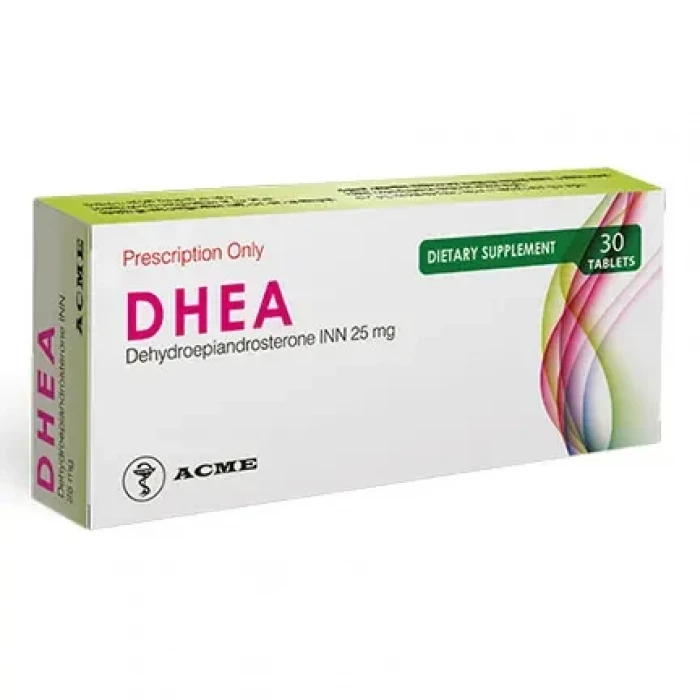
About DHEA 25 mg Tablet
DHEA 25 mg is a tablet product of ACME Laboratories Ltd. that contains Dehydroepiandrosterone. Adequately powered, long-term clinical trials are lacking to support therapeutic use of Dehydroepiandrosterone (DHEA) and Dehydroepiandrosterone sulfate (DHEAS) supplementation (hereafter jointly referred to as DHEA/S).
There are 4 brands of Dehydroepiandrosterone listed in Bangladesh. By unit price, DHEA is among the cheapest of them. The lowest listed price is Depian 25 mg Tablet at ৳ 15.00 per unit.
What is DHEA 25 mg Tablet?
DHEA is a tablet from ACME Laboratories Ltd., with the generic name Dehydroepiandrosterone. Adequately powered, long-term clinical trials are lacking to support therapeutic use of Dehydroepiandrosterone (DHEA) and Dehydroepiandrosterone sulfate (DHEAS) supplementation (hereafter jointly referred to as DHEA/S). The sulfate derivative of DHEA has been shown to act as a noncompetitive antagonist of gamma-aminobutyric acid (GABA) receptors, as well as a positive allosteric modulator of N-methyl-D-aspartate receptors. The doctor decides the dose and course.
Uses of DHEA
Adequately powered, long-term clinical trials are lacking to support therapeutic use of Dehydroepiandrosterone (DHEA) and Dehydroepiandrosterone sulfate (DHEAS) supplementation (hereafter jointly referred to as DHEA/S). Some evidence exists to support the use of DHEA/S supplementation in women with diminished ovarian reserves, in subpopulations of elderly women with osteoporosis, and in mild systemic lupus erythematosus. Reviews of clinical trials found no convincing evidence to support a place in therapy Adequately powered. Ask your doctor whether it is right for your condition.
How to use DHEA
DHEA is taken by mouth. Swallow the tablet with water. Swallow the tablet as advised. Complete the course exactly as prescribed. If you miss a dose, ask your doctor or pharmacist what to do.
Side effects of DHEA
Use caution in individuals with diabetes, as DHEA may increase insulin resistance or sensitivity. Studies in adrenal insufficiency suggest DHEA is generally well tolerated. Use caution in individuals with psychiatric disorders; agitation, confusion, anxiety, paranoia, and suicidal thoughts have been reported. Tell your doctor if any side effect bothers you or does not go away. Contact your doctor if you notice anything unusual after taking it.
Safety and precautions
Use of Dehydroepiandrosterone is not recommended in breast or prostate cancer. Dehydroepiandrosterone supplementation has been evaluated for use in improving oocyte production in infertility. Information regarding safety and efficacy in pregnancy and lactation is lacking. Ask your doctor first if any of these apply to you.
Frequently asked questions
Why is DHEA prescribed?
Adequately powered, long-term clinical trials are lacking to support therapeutic use of Dehydroepiandrosterone (DHEA) and Dehydroepiandrosterone sulfate (DHEAS) supplementation (hereafter jointly referred to as DHEA/S). Some evidence exists to support the use of DHEA/S supplementation in women with diminished ovarian reserves, in subpopulations of elderly women with osteoporosis, and in mild systemic lupus erythematosus.
How is DHEA used?
DHEA is taken by mouth. Swallow the tablet with water.
What are the side effects of DHEA?
Use caution in individuals with diabetes, as DHEA may increase insulin resistance or sensitivity. Studies in adrenal insufficiency suggest DHEA is generally well tolerated.
What is the price of DHEA?
The listed price is ৳ 15.00.
Indications
Adequately powered, long-term clinical trials are lacking to support therapeutic use of dehydroepiandrosterone (DHEA) and dehydroepiandrosterone sulfate (DHEAS) supplementation (hereafter jointly referred to as DHEA/S). Reviews of clinical trials found no convincing evidence to support a place in therapy ... Read moreAdequately powered, long-term clinical trials are lacking to support therapeutic use of dehydroepiandrosterone (DHEA) and dehydroepiandrosterone sulfate (DHEAS) supplementation (hereafter jointly referred to as DHEA/S). Reviews of clinical trials found no convincing evidence to support a place in therapy for DHEA in improving cognitive function or physical strength in elderly patients, or in treating postmenopausal symptoms in women, hyperlipidemia or insulin resistance, schizophrenia, or cancer. Some evidence exists to support the use of DHEA/S supplementation in women with diminished ovarian reserves, in subpopulations of elderly women with osteoporosis, and in mild systemic lupus erythematosus. DHEA is recommended as third-line monotherapy or adjunctive therapy for treatment of major depressive disorder (MDD) by Canadian Network for Mood and Anxiety Treatments (CANMAT) clinical guidelines, and limited data suggest a potential role for DHEA as an anxiolytic.
Pharmacology
The sulfate derivative of DHEA has been shown to act as a noncompetitive antagonist of gamma-aminobutyric acid (GABA) receptors, as well as a positive allosteric modulator of N-methyl-D-aspartate receptors. In humans, neuroprotective, antioxidant, antihypertensive, and anti-inflammatory effects have also been reported. Serum DHEA levels peak in 60 to 480 minutes after administration.
Dosage & Administration
Adrenal insufficiency: 50 mg/day for 3 months is considered a replacement dose, while 200 mg/day achieves supraphysiological circulating levels and is considered a pharmacological dose.
Anorexia nervosa: 100 mg/day for 6 months was used in a pilot study.
Diminished ovarian reserve: 50 to 75 mg/day (in divided doses) has been used in clinical studies of assisted reproduction.
Exercise training–induced muscle damage: 100 mg/day of Dehydroepiandrosterone supplementation was administered over 5 days in a study in young men undergoing exercise training.
Major depressive disorder: Doses ranging from 30 to 450 mg/day for 6 to 8 weeks have been used in clinical studies.
Metabolic syndrome: 100 mg/day for 3 months has been used in a study evaluating effects against metabolic syndrome in pre-and postmenopausal women.
Postmenopausal women: 25 mg/day has been suggested because this dose minimizes androgenic adverse effects; however, only studies in which at least 50 mg/day was used demonstrated positive outcomes as hormonal replacement therapy.
Interaction
Supraphysiologic serum DHEAS levels due to DHEA supplementation have been documented to interfere with commercially available progesterone assays, yielding false-positive increases in serum progesterone.
Contraindications
Use of Dehydroepiandrosterone is not recommended in breast or prostate cancer.
Side Effects
Studies in adrenal insufficiency suggest DHEA is generally well tolerated. However, data from long-term studies are lacking. Observed adverse effects include mania and hypomania, acne, hirsutism, gynecomastia, testicular changes, increased blood pressure, and decreased high-density lipoprotein (HDL) levels.
Use caution in individuals with psychiatric disorders; agitation, confusion, anxiety, paranoia, and suicidal thoughts have been reported. Use of hormones like DHEA may cause erythrocytosis. Use caution in individuals with diabetes, as DHEA may increase insulin resistance or sensitivity. Use caution in individuals with liver dysfunction, as DHEA may exacerbate this condition. Use caution in individuals with polycystic ovarian syndrome, as DHEA may worsen this condition.
Pregnancy & Lactation
Information regarding safety and efficacy in pregnancy and lactation is lacking. Dehydroepiandrosterone supplementation has been evaluated for use in improving oocyte production in infertility.
Storage Conditions
Keep below 30°C temperature, away from light & moisture. Keep out of the reach of children.
Medicine information is for reference only and is not medical advice. Always follow your doctor's prescription and check with a pharmacist.