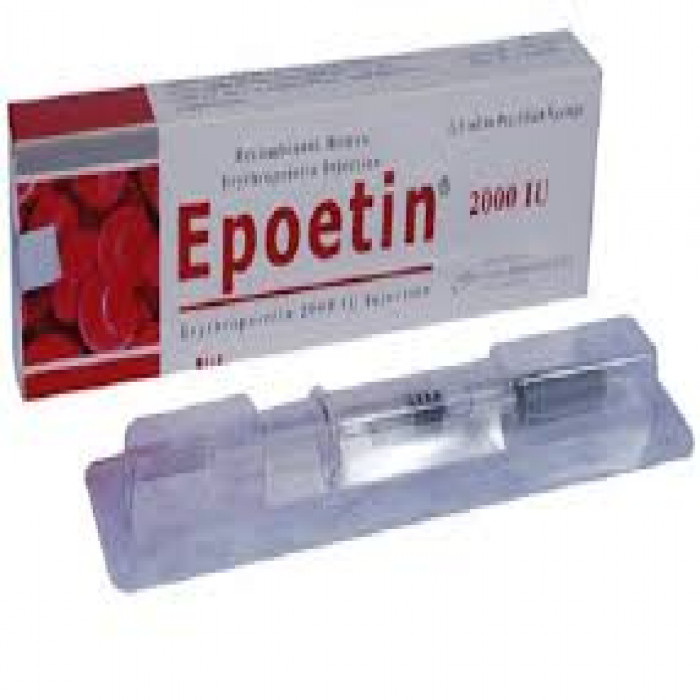
বাংলাদেশে দাম
৳ ১০২৫.০০ প্রতি ইউনিট
দাম হালনাগাদ: ২২ Nov ২০২৬
- জেনেরিক নাম
- Erythropoietin
- শক্তি
- 2000 IU
- ডোজ ফর্ম
- IV/SC Injection
- প্রস্তুতকারক
- Incepta Pharmaceuticals Ltd.
- থেরাপিউটিক ক্লাস
- Drugs for Haemolytic Hypoplastic & Renal Anemia
বাংলাদেশে Epoetin 2000 IU IV/SC Injection IV/SC Injection হিসেবে পাওয়া যায়; এতে Erythropoietin আছে (২০০০ IU)। দাম: প্রতি ইউনিট ১০২৫.০০ টাকা। ঔষধটি Drugs for Haemolytic Hypoplastic & Renal Anemia শ্রেণির অন্তর্ভুক্ত। এটি তৈরি করে Incepta Pharmaceuticals Ltd। Erythropoietin-এর অন্য ব্র্যান্ডগুলো এই পাতায় কম দাম থেকে সাজানো আছে, দাম তুলনা করতে পারবেন। ডাক্তারের প্রেসক্রিপশন মেনে চলুন এবং অন্য ব্র্যান্ড খাওয়া যাবে কি না তা ফার্মাসিস্টের কাছ থেকে জেনে নিন।
Erythropoietin-এর ১৪টি ব্র্যান্ড বাংলাদেশে তালিকাভুক্ত। ইউনিট দামের হিসেবে Epoetin এগুলোর মধ্যে সবচেয়ে কম দামিদের একটি।
Epoetin comes as a iv/sc injection with 2000 IU of Erythropoietin, from Incepta Pharmaceuticals Ltd. Epoetin iv/sc injection contains Erythropoietin, a protein that works like a natural hormone the body makes to stimulate red blood cell production. It is given as an iv/sc injection by a healthcare professional, usually in a clinic or hospital setting. The doctor decides whether it is suitable for a particular patient and how the course should be managed.
It is also used for anemia in patients with certain non-myeloid cancers when the anemia is due to chemotherapy given at the same time. It is not a general tonic for tiredness. Epoetin is used to treat anaemia linked to chronic renal failure, both in people who need dialysis and in those who do not. Whether it suits a particular person depends on the doctor's assessment, and the doctor decides the dose and course.
Epoetin is given as an iv/sc injection by a doctor or trained healthcare professional; patients should not inject it themselves unless the doctor has specifically trained them to do so. Do not inject it yourself unless a doctor has shown you how. Take Epoetin exactly as the doctor prescribes. Do not change the dose or stop early without asking your doctor. The doctor decides the dose, how often it is given, and how long treatment continues, based on blood tests and the patient's response.
The most common side effect is a rise in blood pressure, which is why blood pressure is checked during treatment. Headache, dizziness, fever, tiredness and joint pain have been reported, and occasionally raised potassium levels. Allergic reactions are possible. Tell your doctor promptly about severe headache, swelling, or any sign of an allergic reaction, and seek urgent care if breathing becomes difficult. Contact your doctor if you notice anything unusual after taking it.
Always tell your doctor about other medicines and health conditions. It should not be used by people with uncontrolled high blood pressure or by anyone with a known allergy to Erythropoietin or to products made from mammalian cells. Use it with caution if you have controlled high blood pressure, ischaemic vascular disease, a history of seizures or a suspected allergy to the product. Ask your doctor first if any of these apply to you.
It is also used for anemia in patients with certain non-myeloid cancers when the anemia is due to chemotherapy given at the same time. It is not a general tonic for tiredness.
Epoetin is given as an iv/sc injection by a doctor or trained healthcare professional; patients should not inject it themselves unless the doctor has specifically trained them to do so. Do not inject it yourself unless a doctor has shown you how.
The most common side effect is a rise in blood pressure, which is why blood pressure is checked during treatment. Headache, dizziness, fever, tiredness and joint pain have been reported, and occasionally raised potassium levels.
The listed price is ৳ ১০২৫.০০.
10000 IU/ml (Injection)2000 IU/.5 ml (Injection)3000 IU (IV/SC Injection)3000 IU/.75 ml (Injection)4000 IU (IV/SC Injection)5000 IU (IV/SC Injection)5000 IU/.5 ml (Injection)
এই লেখার বাংলা এখনো নেই; ইংরেজি লেখা দেখানো হচ্ছে।
Erythropoietin is indicated for the treatment of-এই লেখার বাংলা এখনো নেই; ইংরেজি লেখা দেখানো হচ্ছে।
Treatment of anemia in chronic renal failure: Erythropoietin is administered to maintain hemoglobin concentration between 11 to 12 g/dl and hematocrit of 33-36 % in adults.এই লেখার বাংলা এখনো নেই; ইংরেজি লেখা দেখানো হচ্ছে।
Erythropoietin is contraindicated in patients with:এই লেখার বাংলা এখনো নেই; ইংরেজি লেখা দেখানো হচ্ছে।
General: Headache, dizziness, fever, malaise, arthralgia and occasionally hyperkalemia. Cardiovascular: Hypertension is the most common side effect, palpitations. Gastrointestinal: Nausea, vomiting, anorexia and diarrhea may occur occasionally. Allergic reactions.এই লেখার বাংলা এখনো নেই; ইংরেজি লেখা দেখানো হচ্ছে।
Pregnancy Category C. Since there are no controlled studies of erythropoietin in pregnant women, and because animal reproduction studies are not always predictive of human responses, erythropoietin should be used during pregnancy only if clearly needed. It is not known whether this drug is excreted in human milk. Because many drugs are excreted in human milk, caution should be exercised when erythropoietin is administered to a nursing woman.এই লেখার বাংলা এখনো নেই; ইংরেজি লেখা দেখানো হচ্ছে।
Erythropoietin should be used with caution in those patients with controlled hypertension, ischaemic vascular disease, history of seizures, or suspected allergy to the product.এই লেখার বাংলা এখনো নেই; ইংরেজি লেখা দেখানো হচ্ছে।
Doses of up to 1500 lU/kg TIW for 3 to 4 weeks have been administered to adults without any direct toxic effects. If the suggested target range is exceeded, drug therapy may be temporarily withheld until the hemoglobin returns to the suggested target range. If polycythemia is of concern, phlebotomy may be indicated to decrease the hemoglobin.এই লেখার বাংলা এখনো নেই; ইংরেজি লেখা দেখানো হচ্ছে।
Erythropoietin should be stored at 2°C to 8°C. Protect from light. Do not freeze & avoid shaking.ঔষধের তথ্য শুধু জানার জন্য, এটি চিকিৎসা পরামর্শ নয়। সবসময় ডাক্তারের প্রেসক্রিপশন মানুন এবং ফার্মাসিস্টের সাথে কথা বলুন।